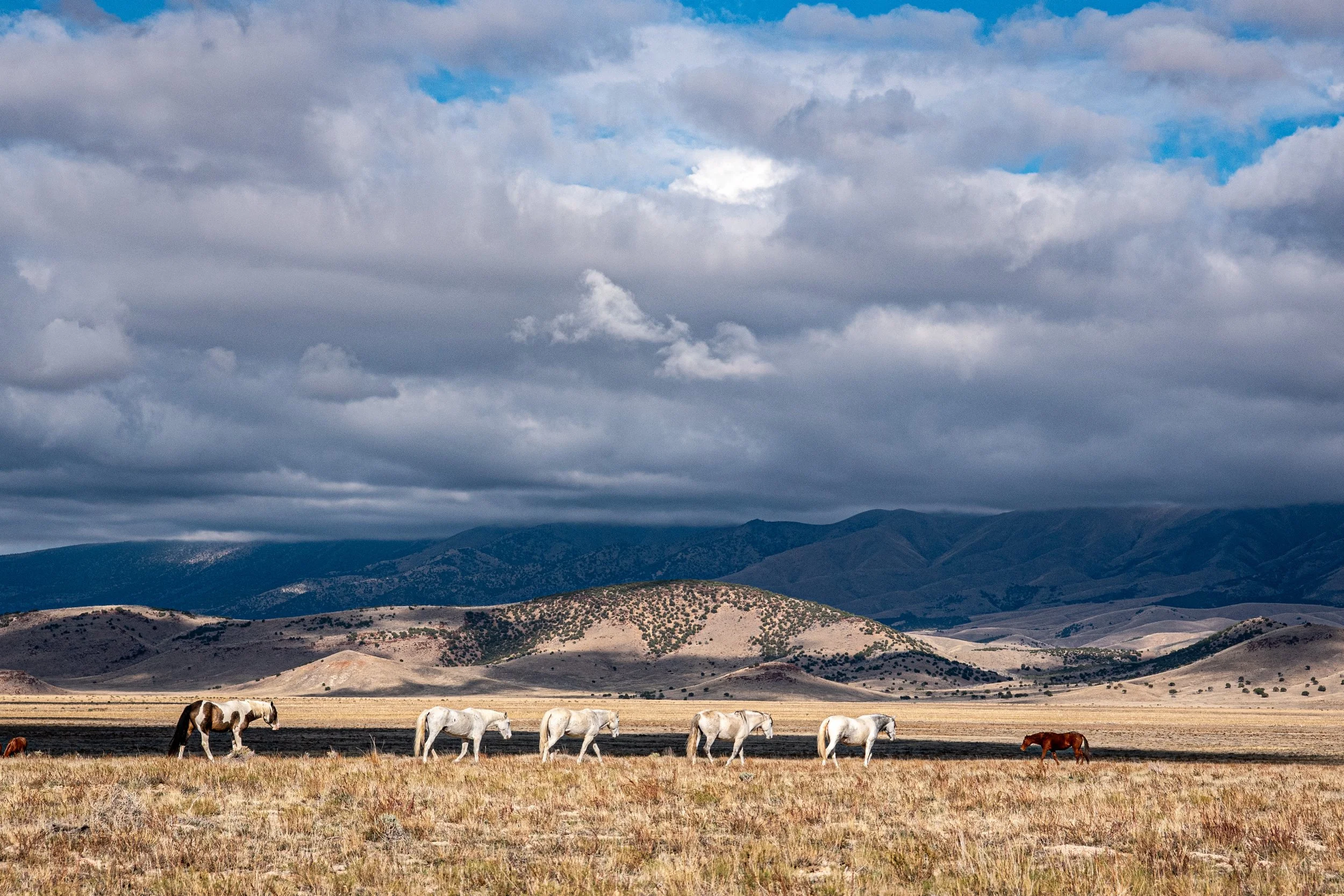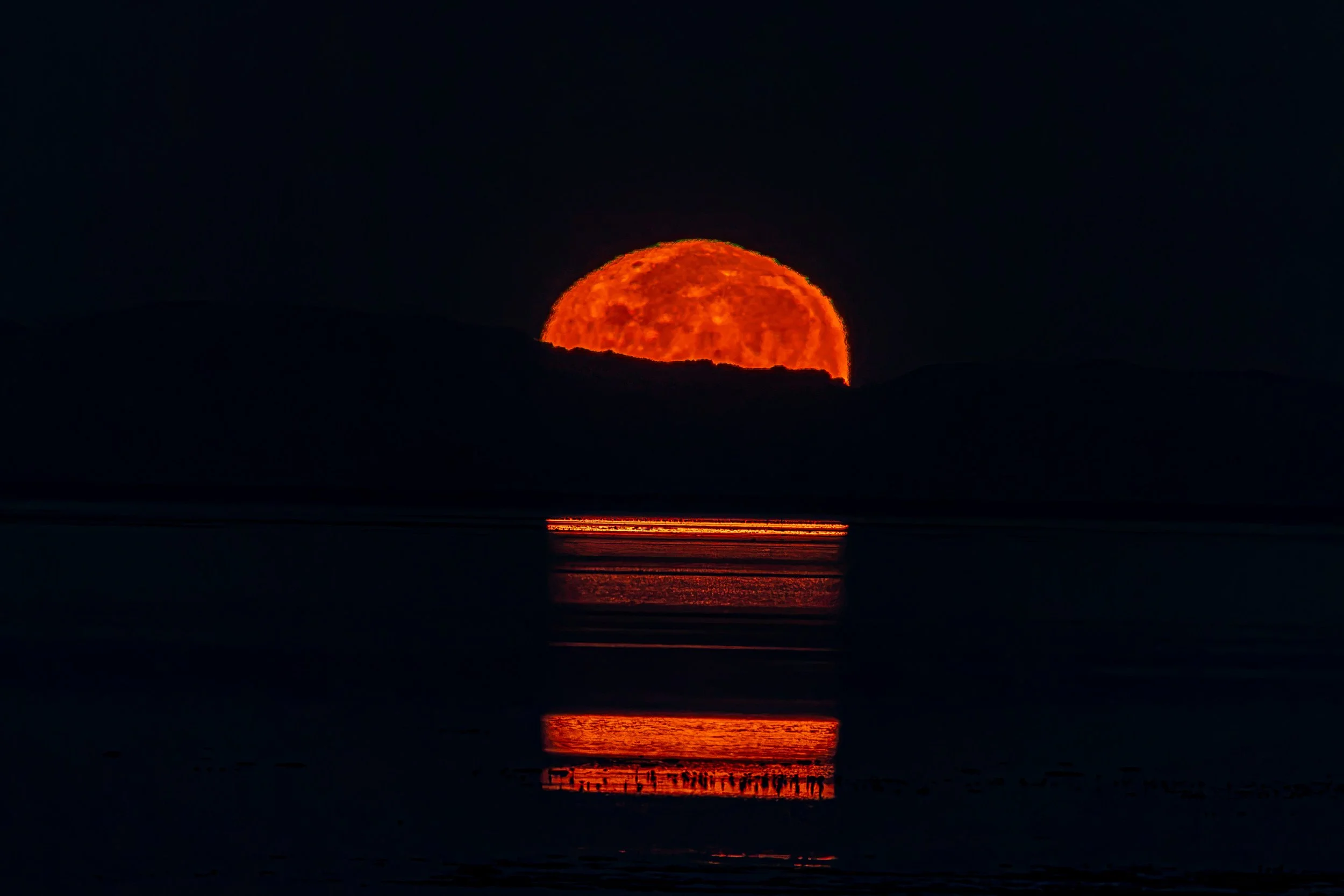
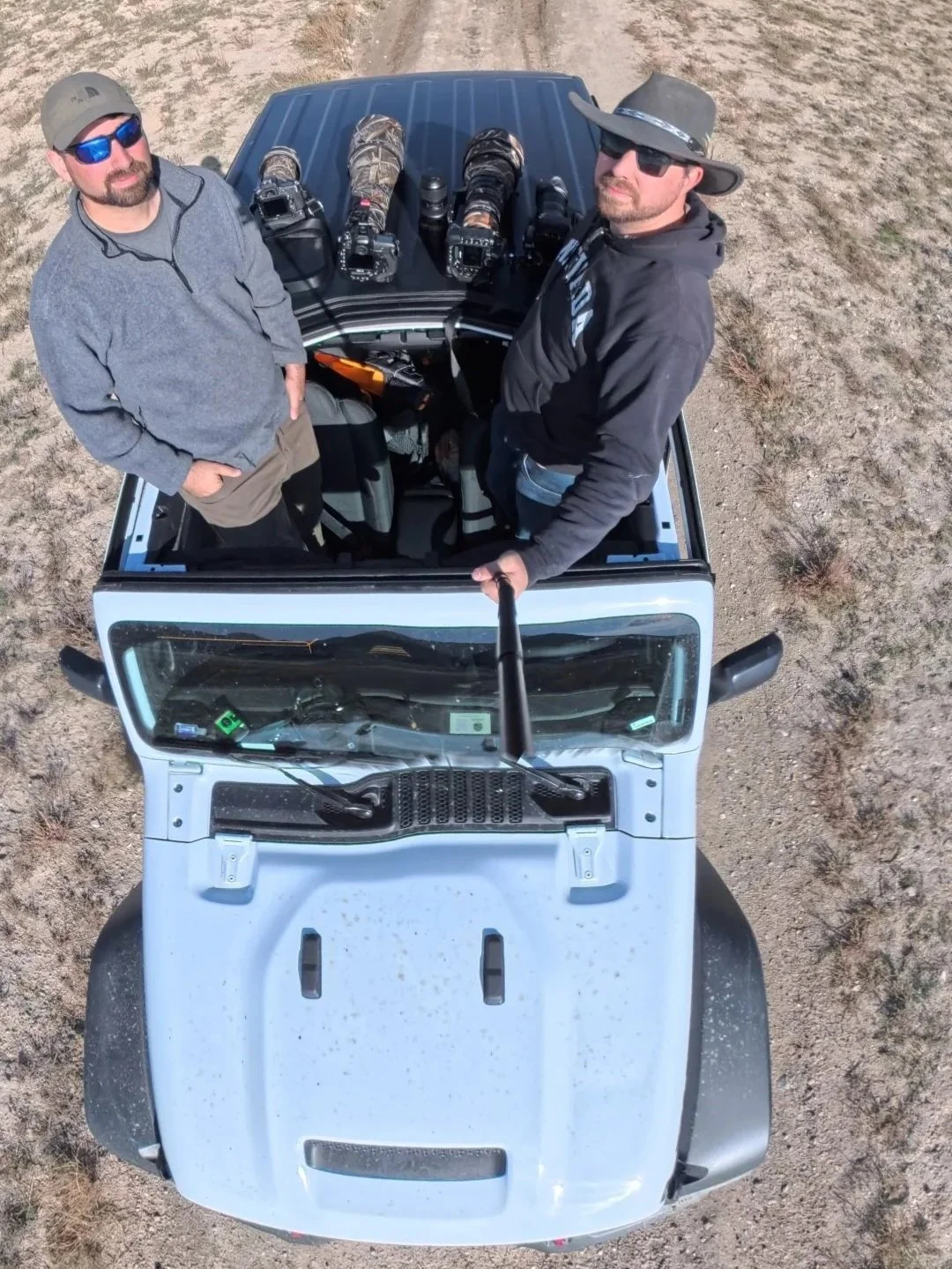
After the roundup, we had all day Sunday before our red-eye flight home. An internet search pointed us to the Onaqui wild horses which were only about an hour and a half southwest of Salt Lake City. As an orange moon set behind us early in the morning, we left Antelope Island and headed south, out of the city and toward the Onaqui range. The moment you get away from the highways the land is empty. Suburban neighborhoods with condos and shopping centers evaporated into wide-open flat valleys stretching between majestic mountains dotted with pines. We popped the roof off of the Jeep so we could get some 360 cam footage and make shooting from the vehicle easier if we were to find the horses.
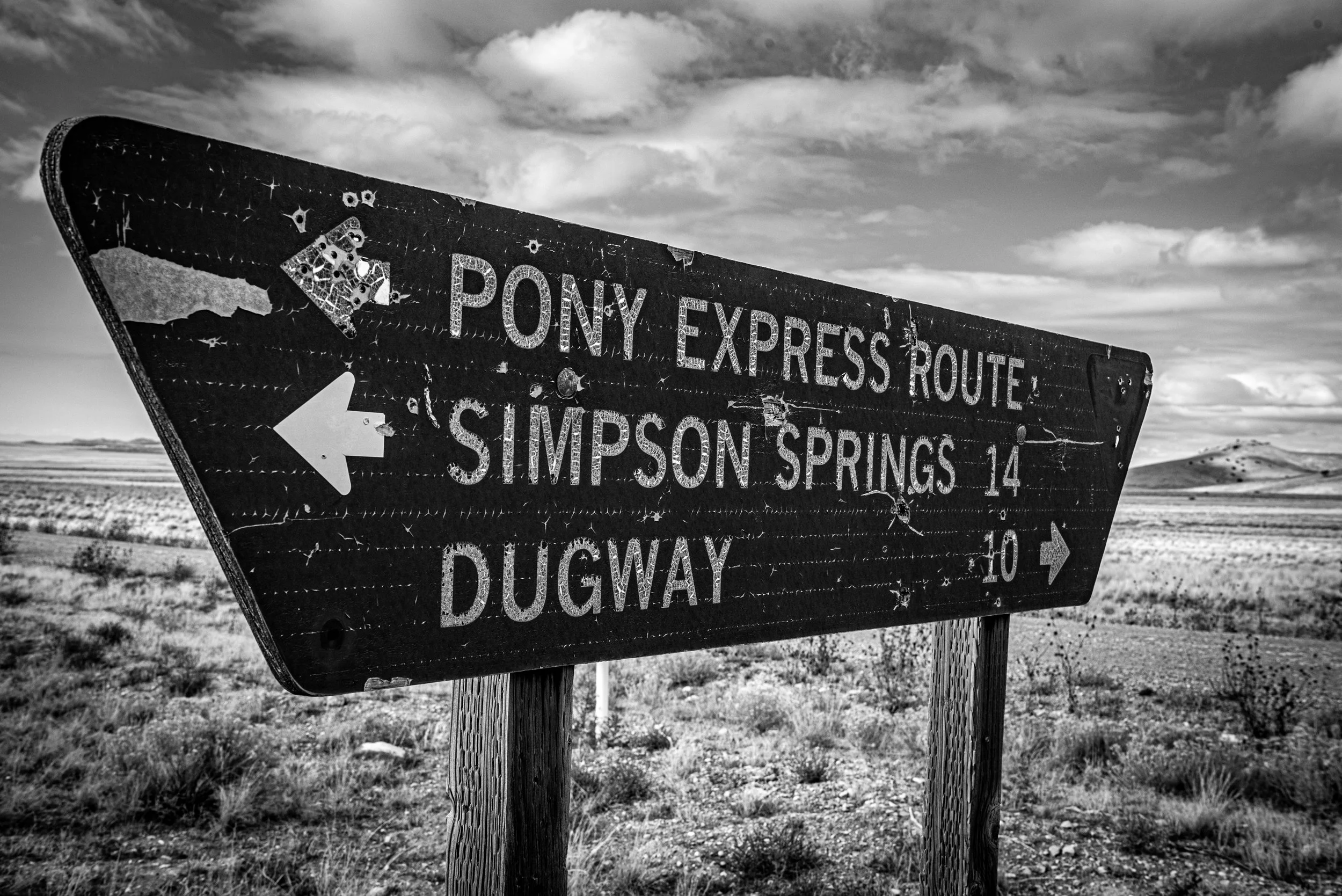
We ended up taking a semi-paved road along the original Pony Express route. Before the telegraph, mail traveled across the west by stagecoach taking a week or more. The Pony Express utilized young riders and horses through a series of stations to move mail quickly through the open landscape. The service only lasted 18 months but the impact on the lore of the wild west was cemented. There were stone monuments along the road to mark different historical points along the Pony Express and we stopped to check out a few of them.
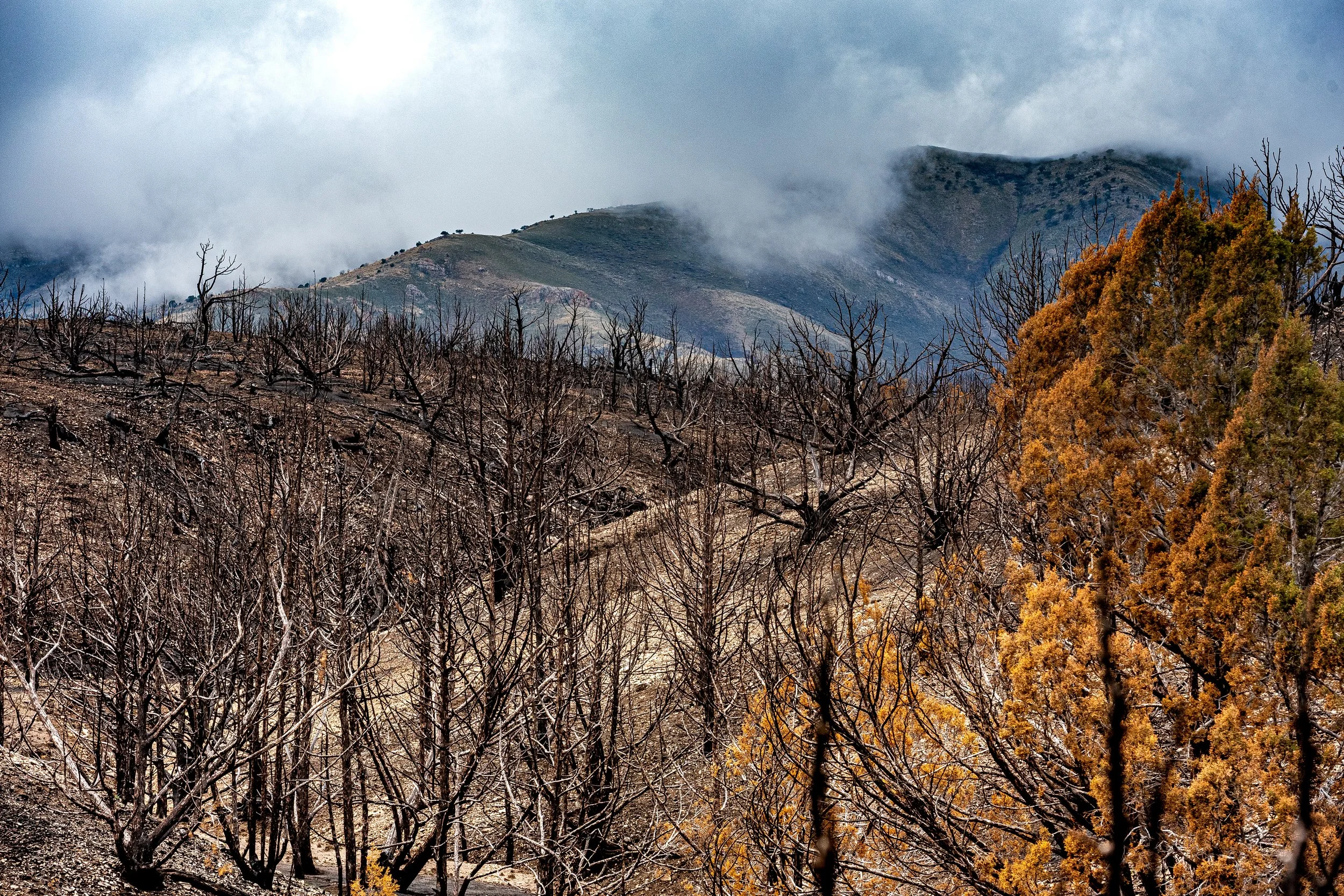
The management area is large and the wild horses have free range throughout the territory. We first looked in an area along the West Faust Creek. The road is not paved and rather rugged, but still showed up on our GPS as a navigable road. It had rained heavily when we had arrived in SLC just a few days prior and it was clear that the range had received its fair share because the dirt road was still muddy in places. We turned on the 4WD. The road took us from the open sage plains up into a broad canyon with pinion pine to an area that had been ravaged by the Stookey Wildfire back in July. Almost 13,000 acres had burned and you could still smell the acrid bitterness four months later. Charred trees looked like a forest of black ghosts. The loss of vegetation from the fire left the barren hillside to erode mud, gravel, and boulders down into the road. We crossed several washed out sections which required careful technical driving over deep ruts. Some hunters coming down out of the area indicated that they had not seen any horses further up. The road dead-ended and we headed back out.
We continued west to an area where we had heard the herd might also frequent just south of Dugway. We drove some more of the open empty Pony Express road, crossing over the Onaqui Range at Lookout Pass with its huge limestone cliffs before dropping into Skull Valley. Not long after a fork in the road, we drove past a pile of fresh horse droppings and knew we were getting close. Off in the distance there were a few cars parked and we could see shapes moving around in the field adjacent. Wild horses for sure. We hurried over and saw a small herd of maybe 10-15 mustangs grazing near the road. Success!
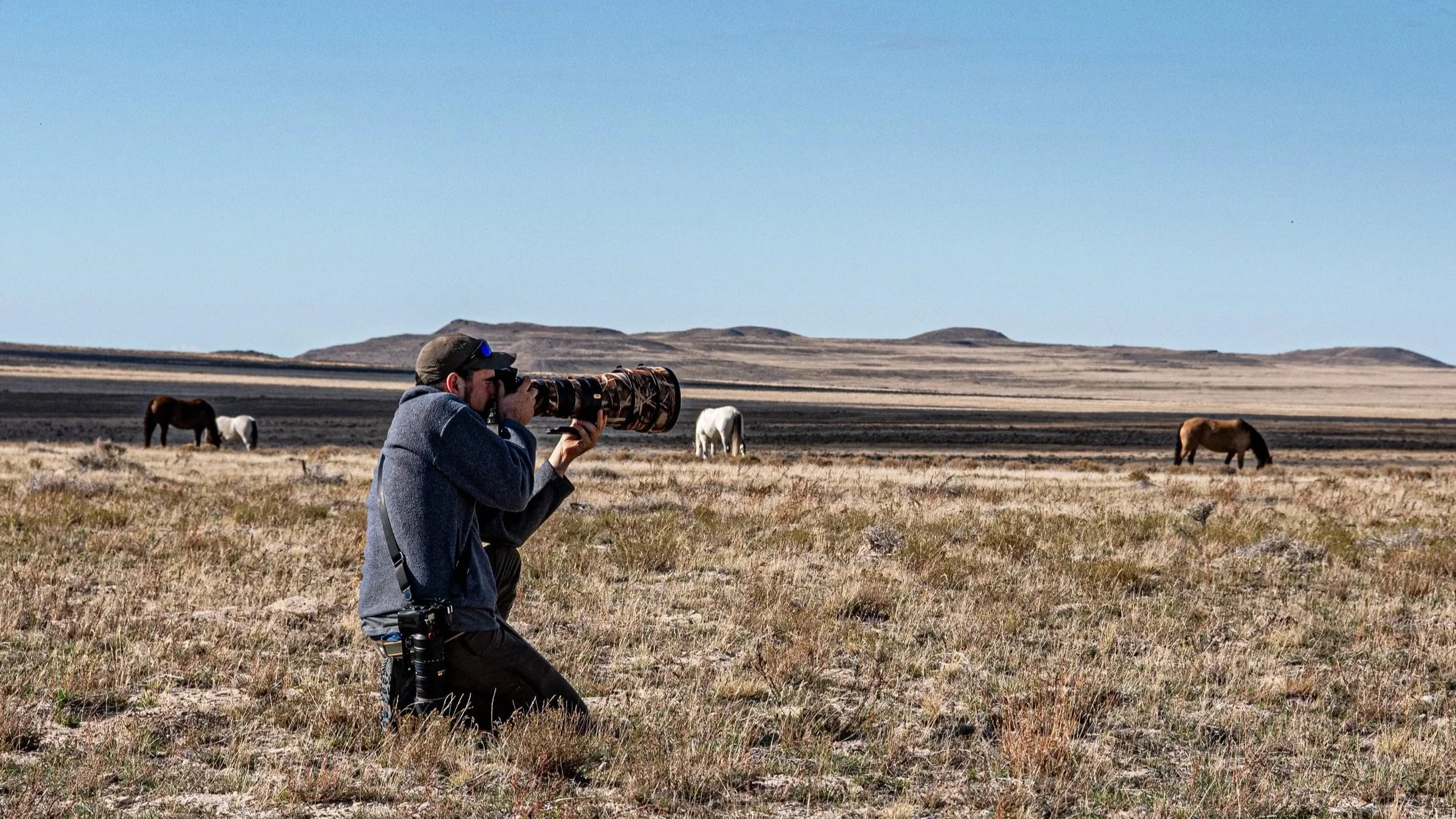
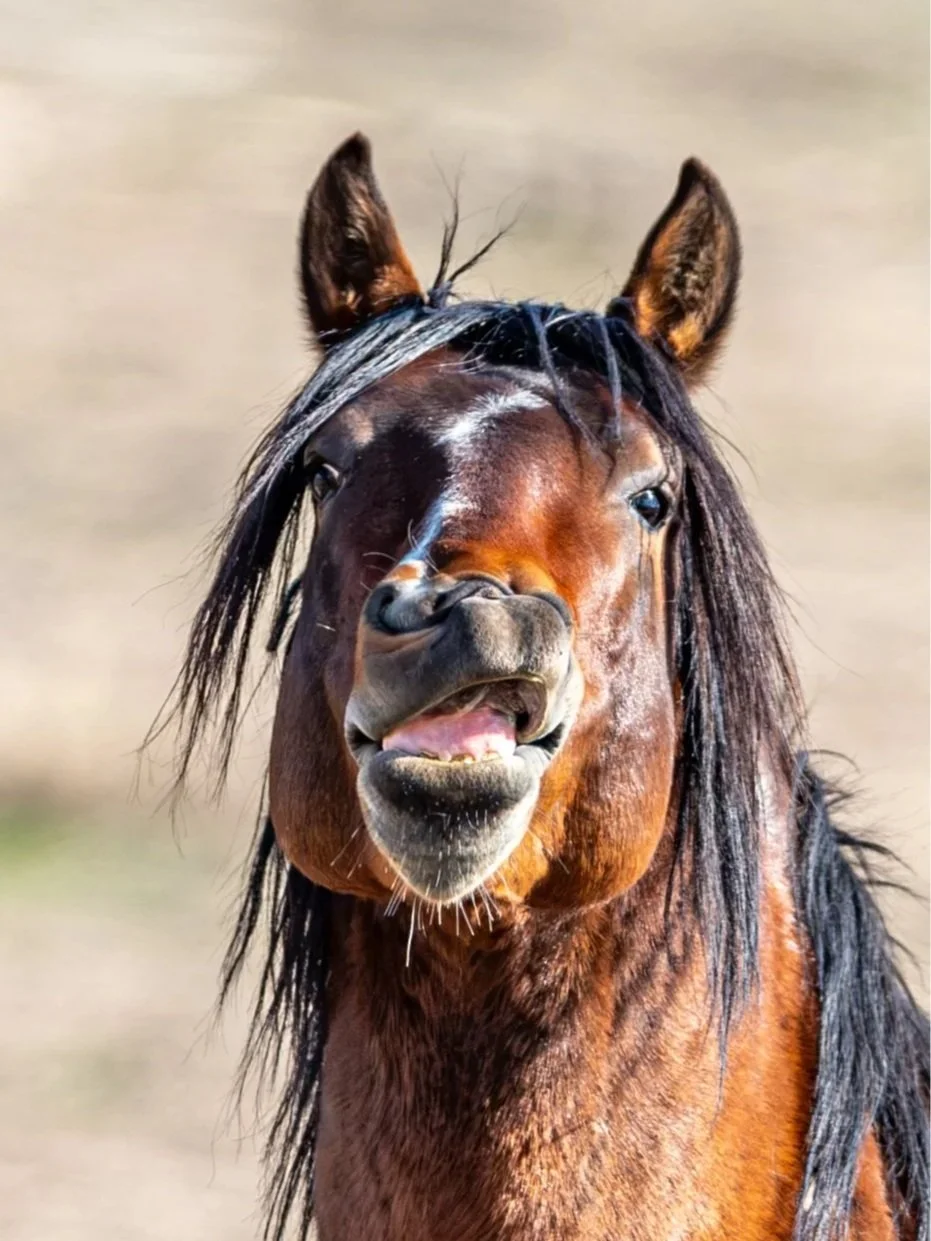
We stayed with them for a while watching them graze, drink water, and whinny at each other. At one point Greg was laying in the road trying to get a low angle when a black-maned stallion began chasing another horse right towards him! He quickly got up and hid behind the car as the horses ran past. There was a short scuffle with some raised hooves and snorting. The other horse ran off, but the stallion, seeing Greg still standing near the Jeep, doubled back at him. Greg rounded the back of the car and the stallion ran off. Wildlife photography requires a keen sense of awareness with unpredictable animals.
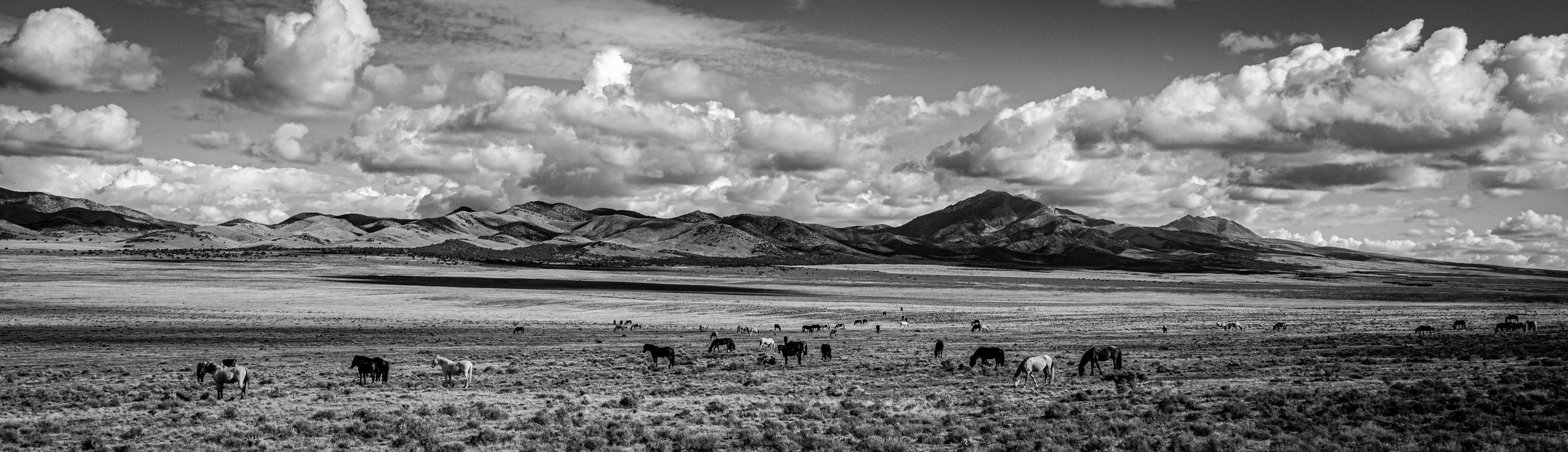
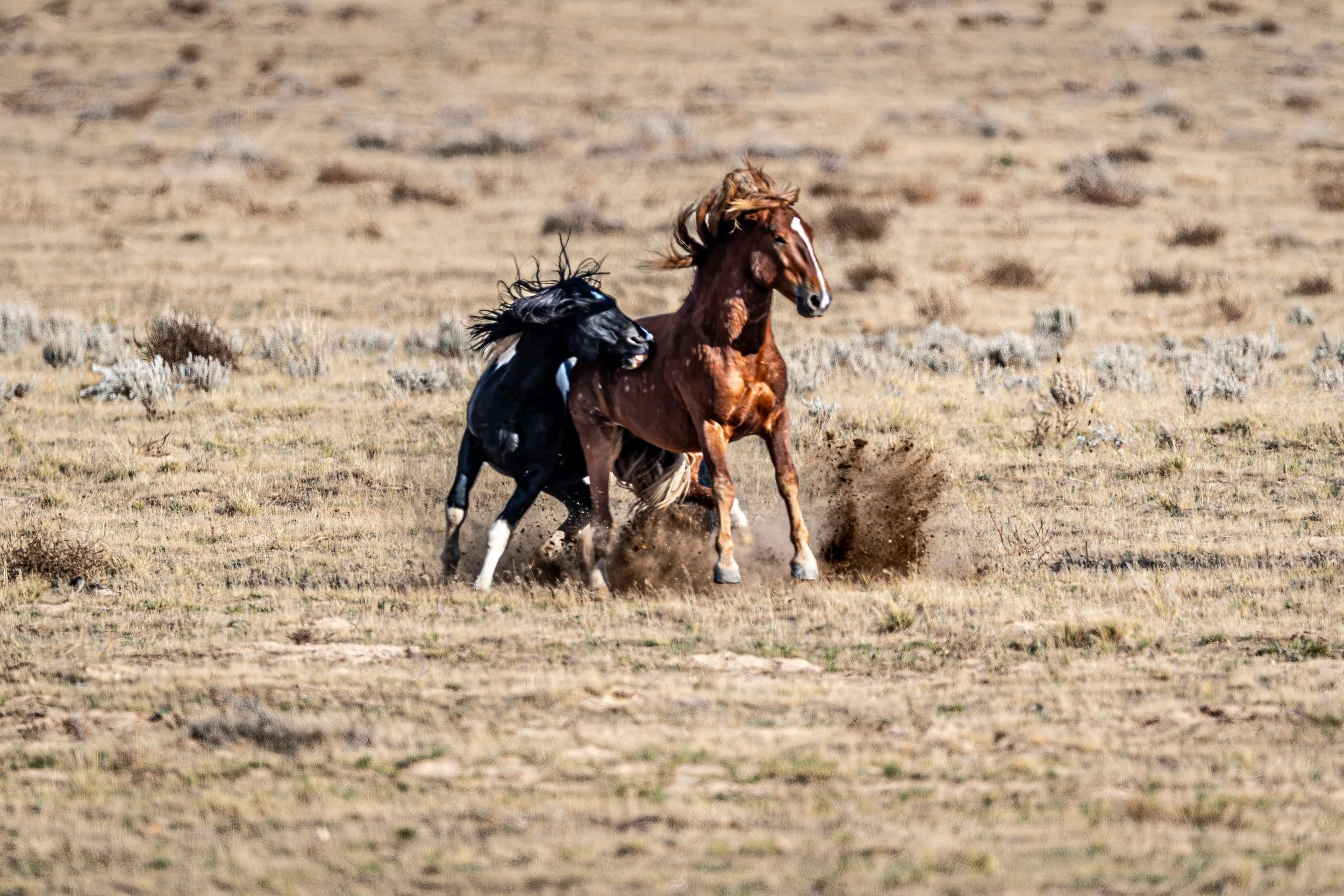
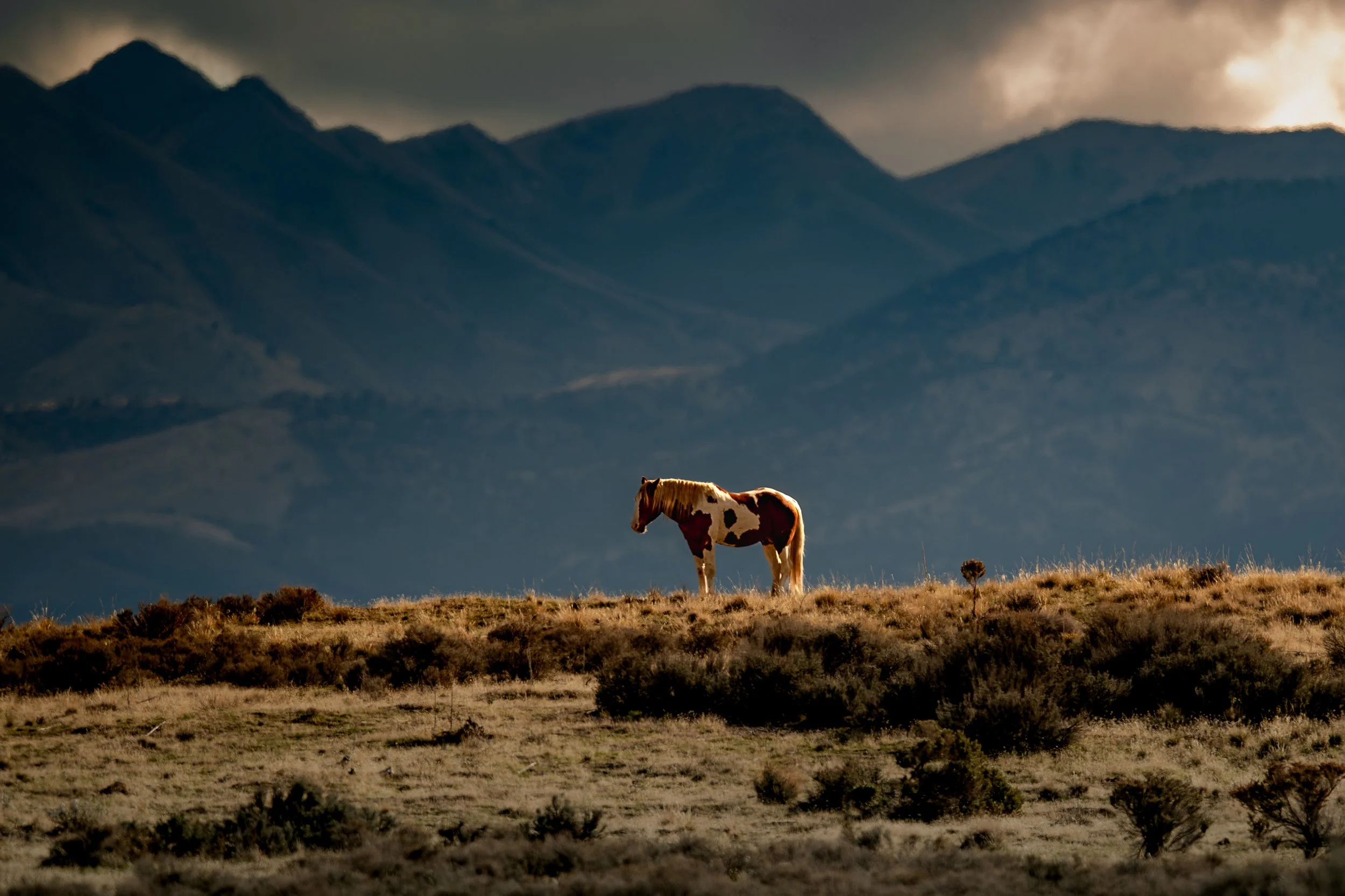
The herd moved away and we saw some more cars further up the hill on the flanks of the Simpson Mountains with little shapes on the horizon that we knew must be horses. As we approached, there was a beautiful paint stallion on a hill. We crested the next hill to see an even larger herd of maybe 60 horses on both sides of the road. We shot exclusively from the roof this time as there were too many to keep track of and we thought it best to ensure everyone's safety by staying in the car. We worked both sides of the road following the action and the light. It was like being in Kenya again: one of us would shoot low with a telephoto while the other would shoot wide from above. We switched lenses often to get the details and the bigger picture, keeping eyes out all around us. Small chases broke out, squabbles started, two of the horses even mated, there was a lot to capture.
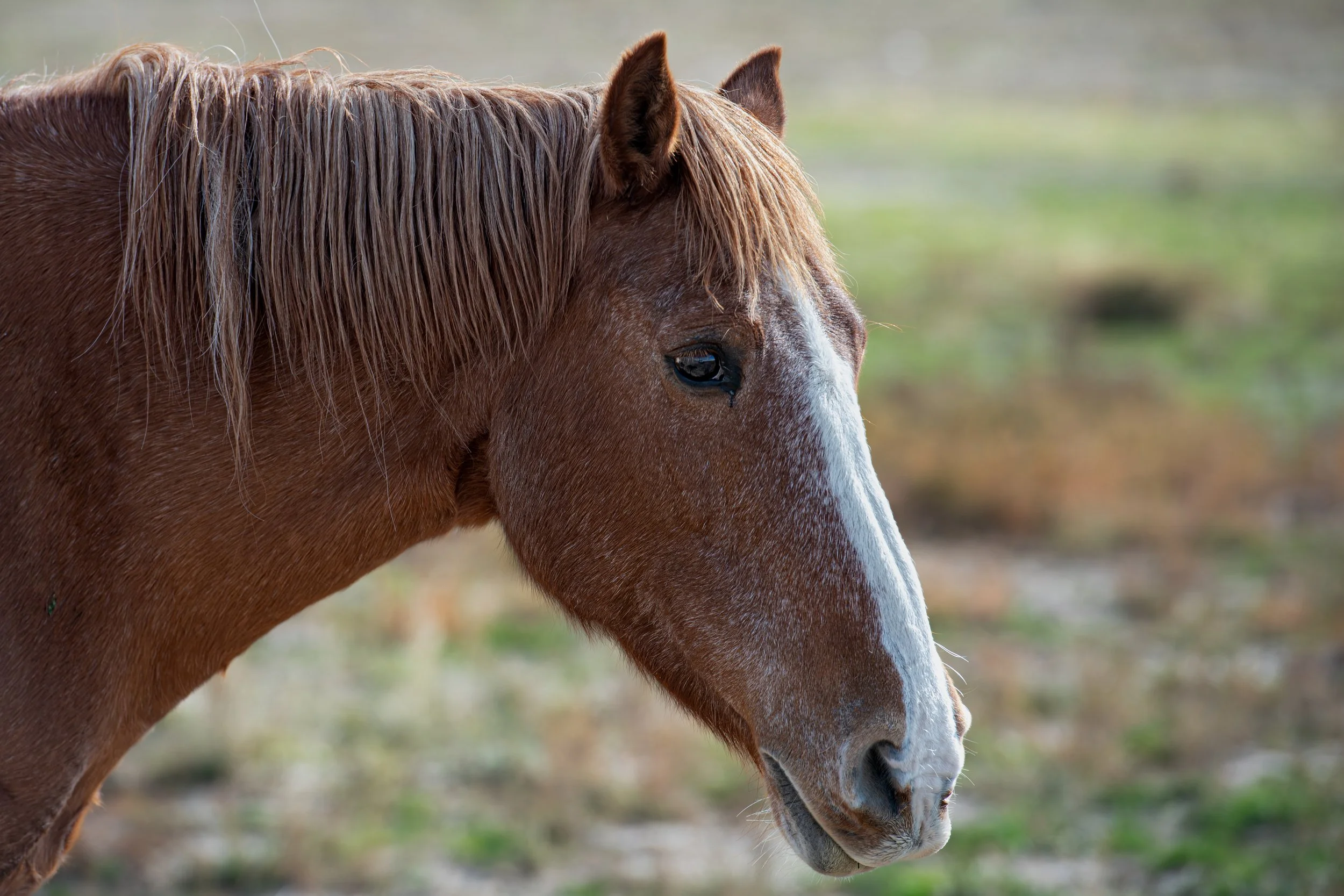
Another photographer wandered around the small line of vehicles and we struck up a conversation about camera lenses before turning to the horses. She indicated that the herd had once been much larger, but an effort in 2021 by the BLM (Bureau of Land Management) had significantly reduced its size. It’s a controversial practice in the intermontane west. The horses, brought in by settlers and cavalry in the late 1800s and early 1900s, have few predators and the populations can burgeon in environments that cannot support their numbers. It’s similar to the issue at Antelope Island with the bison, though the bison are a native species. The 2021 Onaqui gather took in 435 horses and released 123 back into the wild. The captured horses are sent to facilities for adoption or sale. Supporters point to damage to the ecosystems while detractors of this practice are concerned for animal safety and well-being. It’s a complex issue.
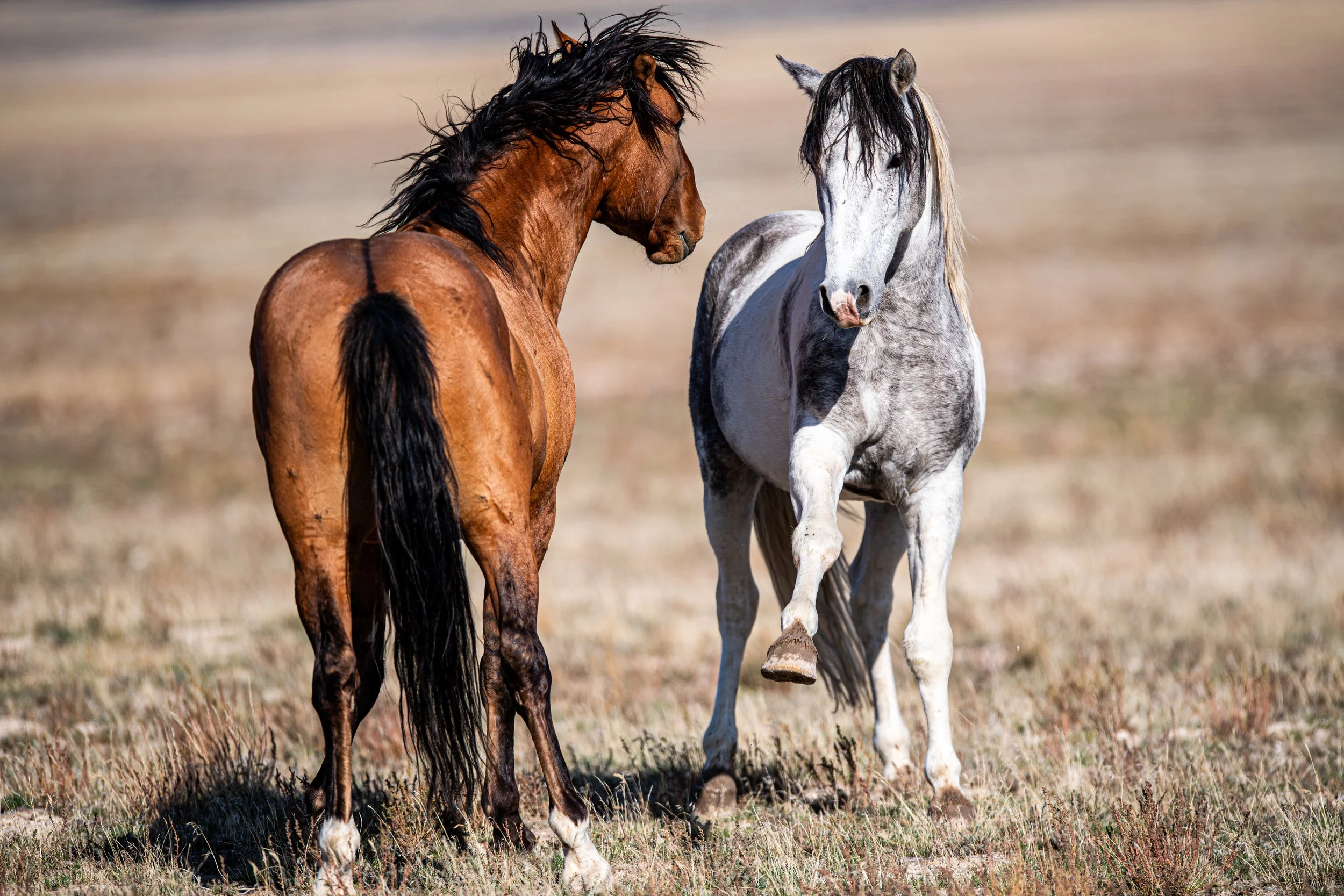
The highlight of the afternoon was when one of the bay stallions got real feisty with some of the other stallions near him and he had two full-on battles. Horse fights over territory or females are usually over quickly but can be extremely violent. They stand facing each other and rear up onto their hind legs to use their front hooves as weapons while also biting their opponents’ necks and shoulders, sometimes even drawing blood. The first battle was with the paint that had been on the hill. Dust flew from the ground as the bay kicked towards the paint. We could hear the snorts and chuffs as the two horses danced. The paint retreated and the bay stallion took on another challenger, a gray horse. These two really got into it. They reared up several times to challenge one another, striking each other with strong hoof jabs. Their immense bodies collided with terrific force into one another. The bay attempted to bite the gray on the neck and the gray bared its teeth. They postured and pawed at the ground in between bouts. The stark difference in colors between the two horses was a beautiful yin and yang.
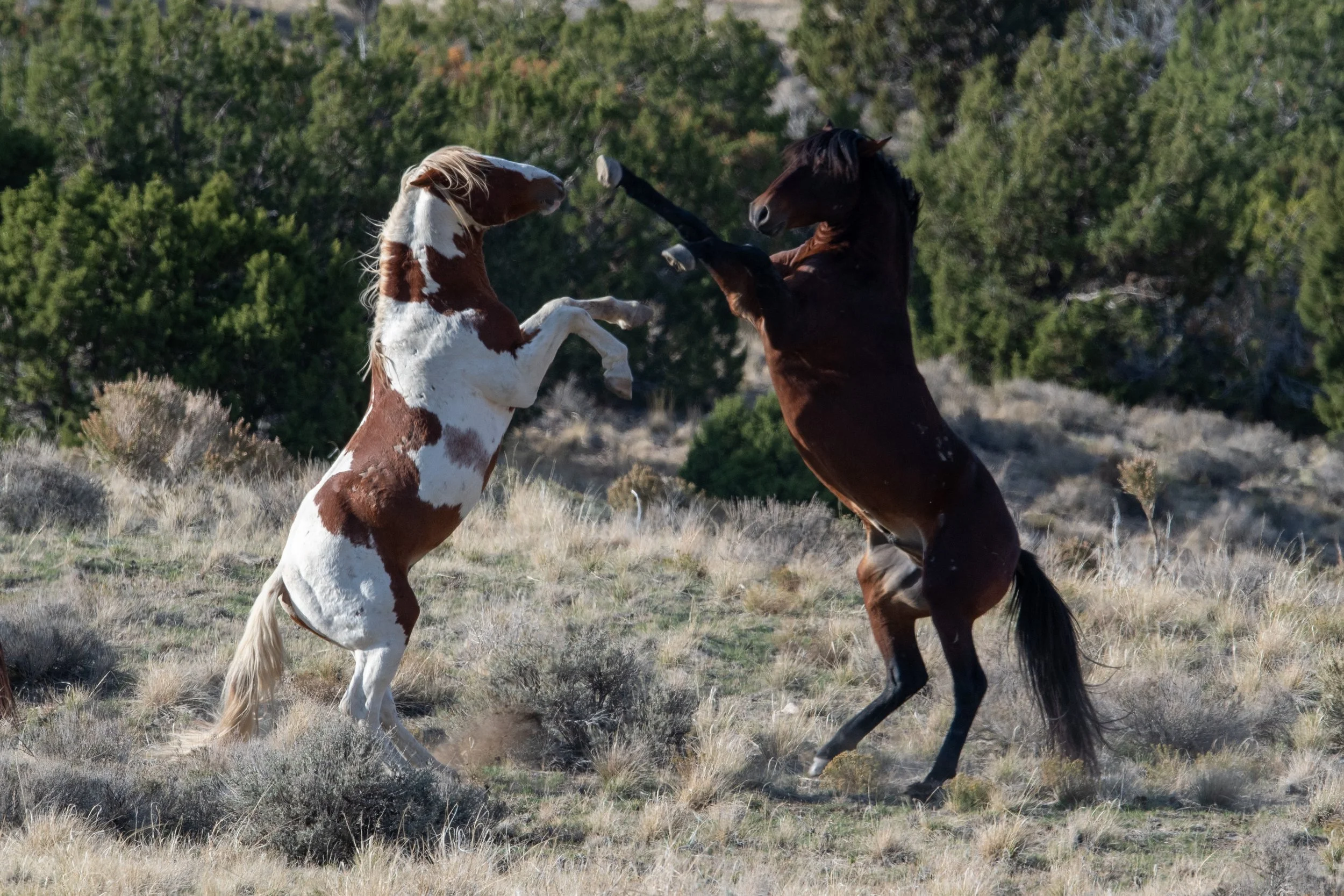
Round 1: Paint vs. Bay. Bay wins.
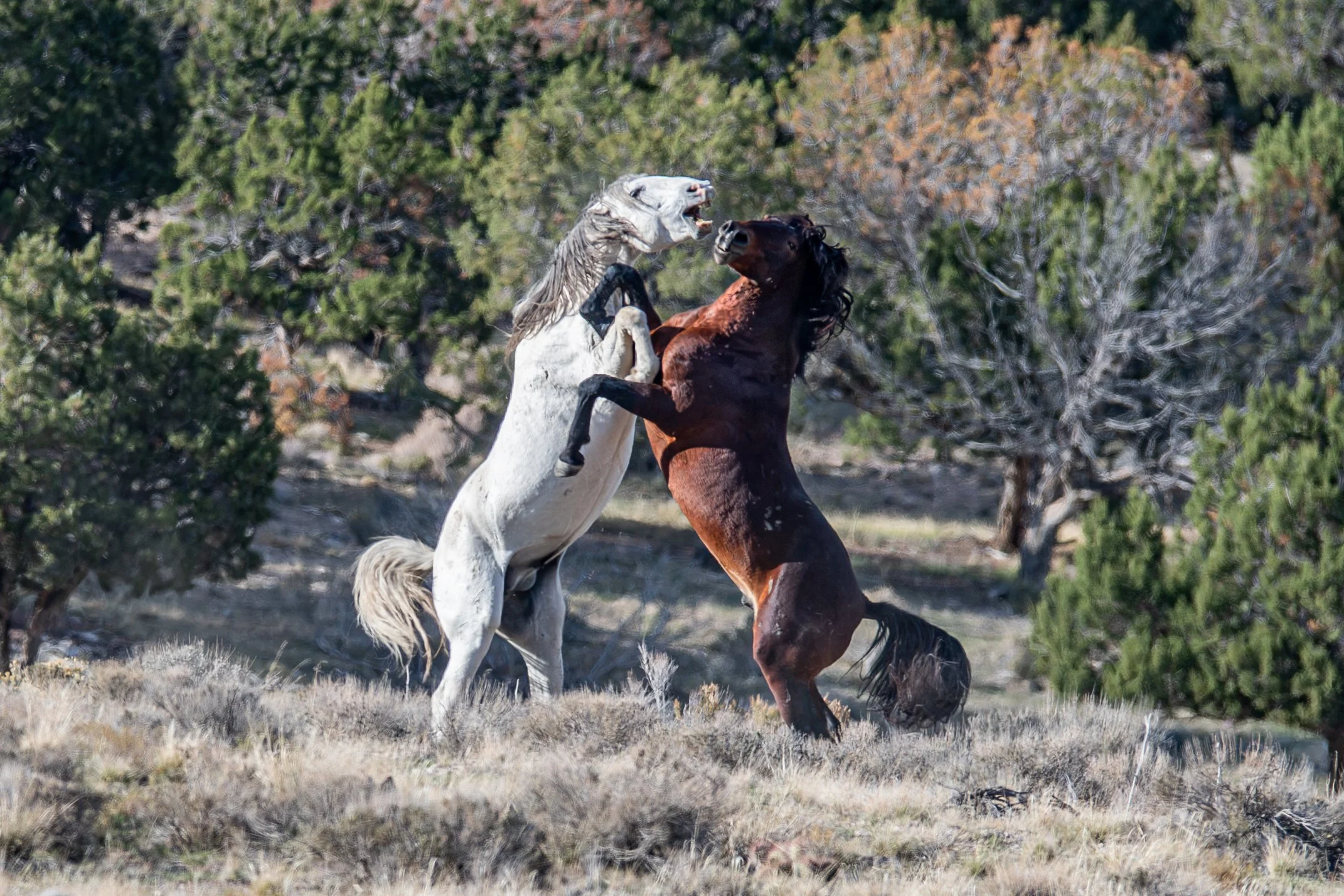
Round 2: Bay vs. Gray. Bay wins.
As wildlife photographers we were in awe watching the drama unfold. It didn’t match the excitement of a lion kill but it was about as close as we would get out there. The bay horse eventually won both fights and chased the gray off across the road, passing closely to the small crowd that had gathered. With a plane to catch and dinner to be had, we decided that the fighting stallions would be a perfect way to end the trip. We put on the Rolling Stones’ Wild Horses and headed north back to I-80 through more open roads, processing the beauty, untamed nature, and true spirit of the American west.
Check out more of our work in the American West in the gallery and stay tuned for more adventures!
-Ed & Greg