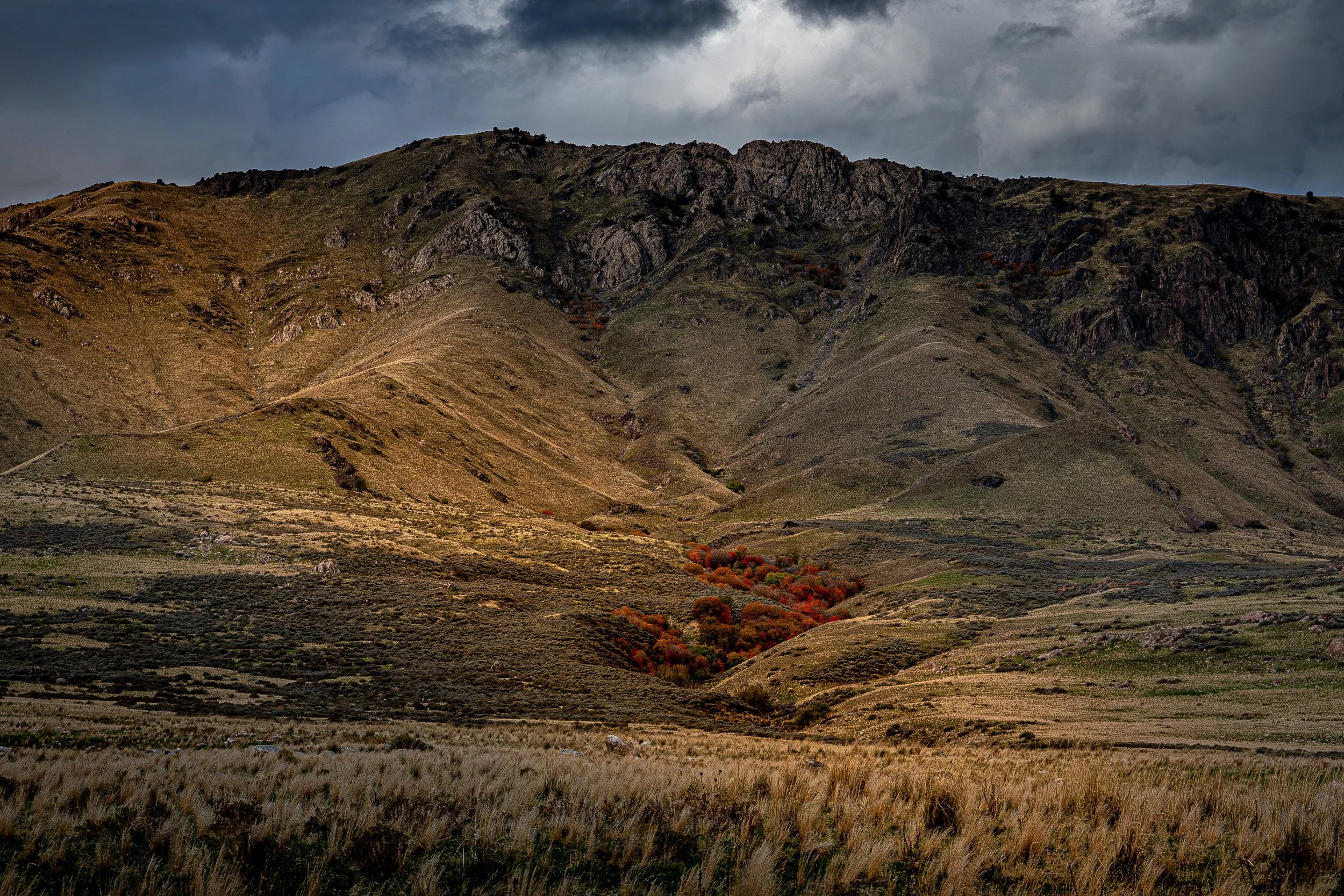
Once again we headed west in late October for the 40th annual Bison Roundup on Antelope Island in Utah. This was Greg’s third visit and Ed’s second. In this year’s blog installment, we’ll focus less on the experience (covered previously here and here) and more on our logistics. Although the roundup is all about the bison, it’s the cast of characters that make it really special. And as wildlife photographers, it’s what we like about the roundup. It’s a unique blend of wildlife and people.
Planning
Although the trip was scheduled in October, we started considering our plan around July. There were two main areas we spent time on: finding the best vantage points along the ride and preparing for portraits before and after the ride.
The riders head north from Fielding Garr Ranch on the south end of the island and work north to a location we call the Chokepoint. Here, bison and riders alike are forced to come around the flank of the mountain down close to the road. It’s one of the most popular spots to see the roundup for that reason. You can feel the thundering hooves of the bison and hear the calls and shouts from the riders over the din.
We reviewed satellite images and 3D terrain models to better understand the best vantage point. We wanted to be just north of the Chokepoint to catch the riders and the bison come over the ridge toward us with the majestic mountains in the background. Last year we shot from the side of the road adjacent to the Chokepoint. Our big lenses were too close and the side angle of the riders and bison was not as dramatic. We scouted in the field the day before the roundup and found the best location to park. For lenses, we were going with the big guns: a 600mm, 400mm, 200-500mm, and a 70-200mm. For bodies we have two Nikon d5’s and two Nikon d750’s. We also had hotshoe mounts for our phones and Ed had an Instacam 360 X5 on the end of the 600mm for some behind-the-scenes shots.
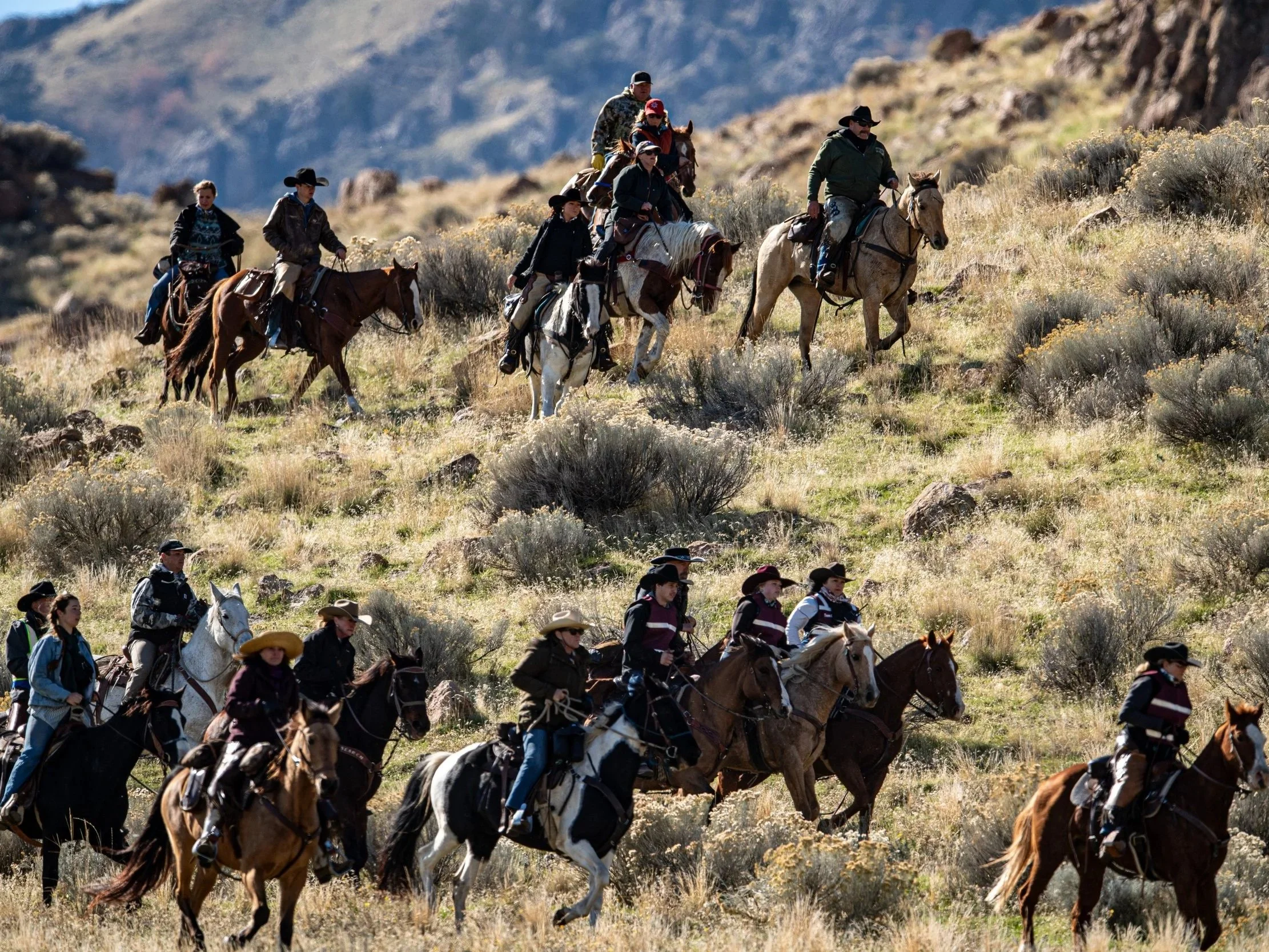
This year’s riders come through the Chokepoint.
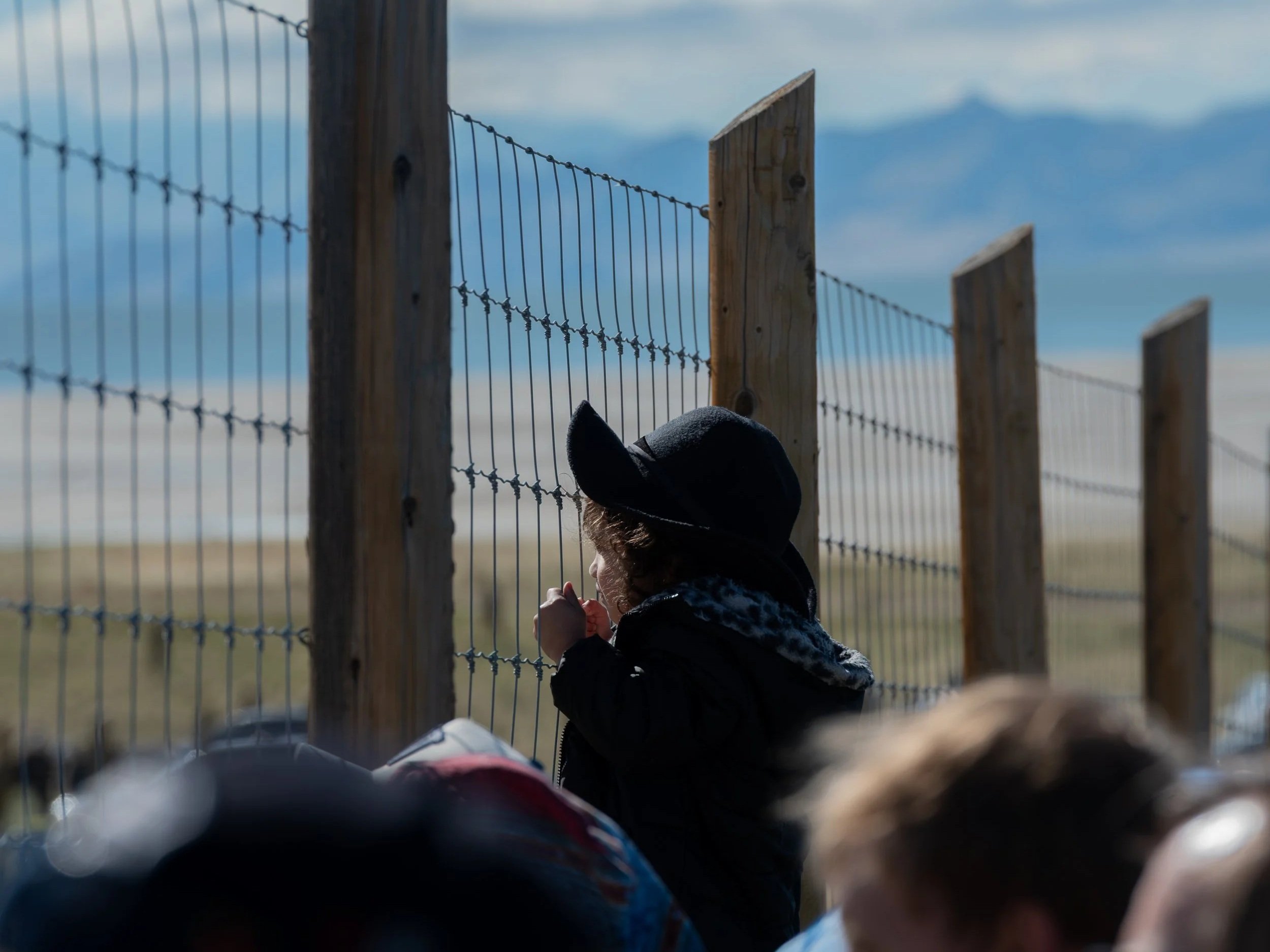
An eager onlooker watches from the fenceline.
After breaking through the Chokepoint, the riders head over Heartbreak Hill before making the final drive to the corrals on the north end of the island. Previously we had found a good spot on the end of the fence close to the corrals to catch the riders as they made their way to the staging area to head back to Fielding Garr. Here we would need the big lenses for the final drive and then switch to wider angle lenses for portraits as the riders and horses relaxed. For this and for the morning meeting we had a 17-50mm, 24-70mm, and two 70-200mm lenses.
Strategy
Our plan was to get down to Fielding Garr early so we could wander the camp and get early morning shots with the riders before the safety meeting. Once the meeting was over, we would stay as the teams mustered on the field and headed out. We were planning to skip the majority of the ride and head to the Chokepoint instead to claim a good spot. Once the riders and bison started making their way up Heartbreak Hill, we would scoot around to the north to secure a position along the fenceline near the corrals.
There’s an old saying about the best laid plans…. they were right, ours went absolutely sideways.
We arrived early to Fielding Garr as the camp was coming to life. People watered and worked their horses, dogs were fed, and the riders sipped their hot coffee. It was cold for late October and damp, having rained the day before. There were plenty of other photographers and news crews there to cover the event. Greg even made it into a brief shot in KSL’s news report.
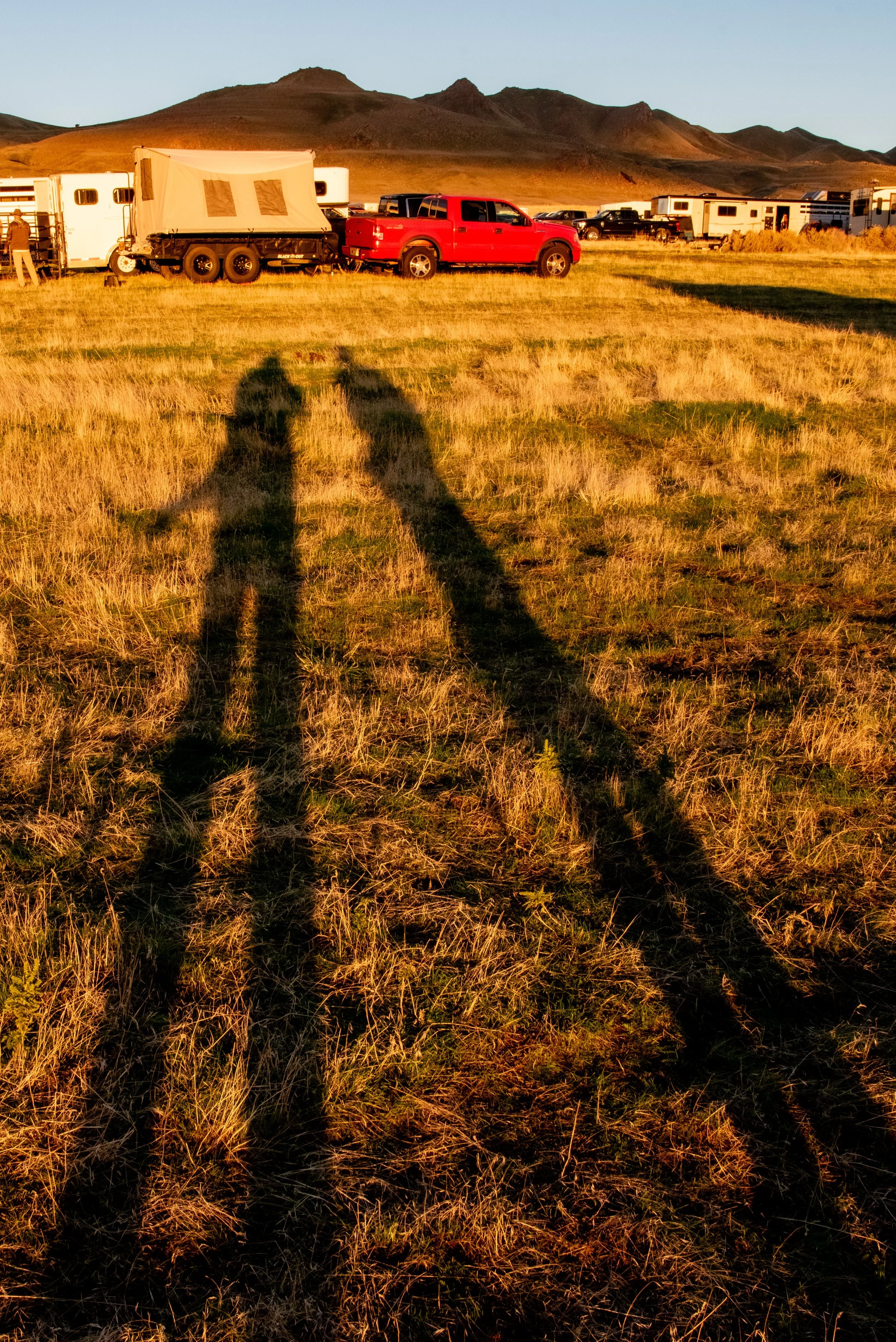
Time to split up.
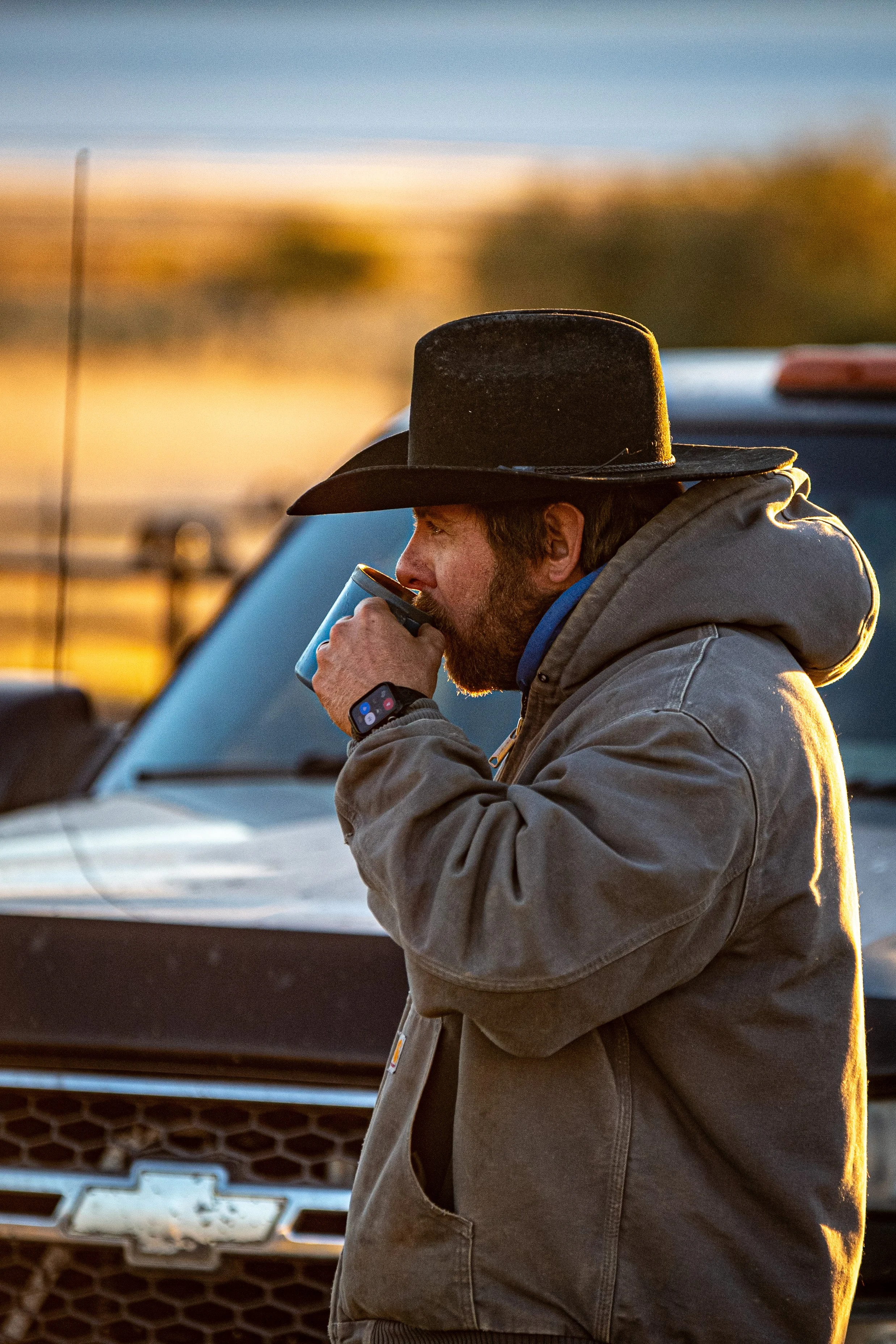
Great blend of old-school attire with a modern smartwatch.
We split up to cover more territory. It’s one of the advantages of shooting as a team. We honed this skill in Kenya in 2019 and again in 2023. It’s successful because we have really good communication about what we’re shooting, how we’re shooting, settings we’re using. While one of us is swapping a lens, the other has eyes on the scene around us. We may capture the same person or animal from different angles, giving us better chances of coming away with a good shot.
At 8:30, the crowd gathered around the back of a white pickup truck where Jeremy Shaw, one of the park managers, started the safety briefing. Again, we worked the crowd from different locations, capturing the array of attire from traditional cowboy with bobcat pelt chaps to the more modern with smart watches and penguin bathrobes. Doranne Pittz, another park manager, introduced Rios Pacheco of the Northern Shoshone tribe for the sunrise prayers and blessing of the team captains.
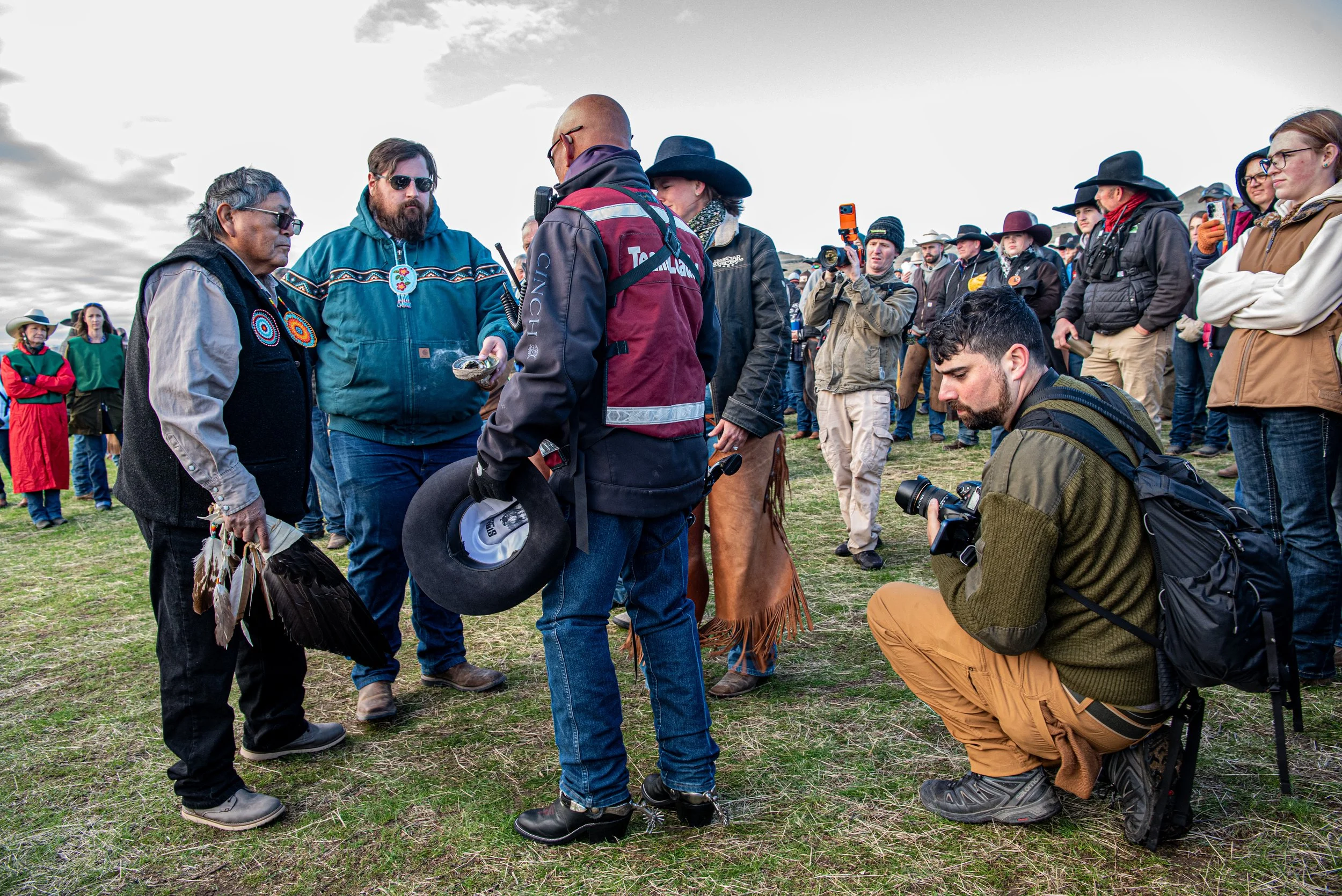
Greg got some great shots right behind the team leader as he is blessed by Rios Pacheco (left).
Once the muster headed out, we made for the Chokepoint. However, although we were there relatively early, the rangers and DNR were preventing people from parking on the right shoulder this year to allow safe passage for emergency vehicles. We spent some time trying to find a spot that we could pull into, but to no avail. We were forced to park up several minutes down the road and hump all of our gear to the vantage point that we wanted. In the future, we hope that the DNR and law enforcement adequately mark out parking areas early. The lack of parking there along the road led to a fair bit of confusion before, during, and after the ride. Although we had not planned for this possibility, we adapted and made the best of it.
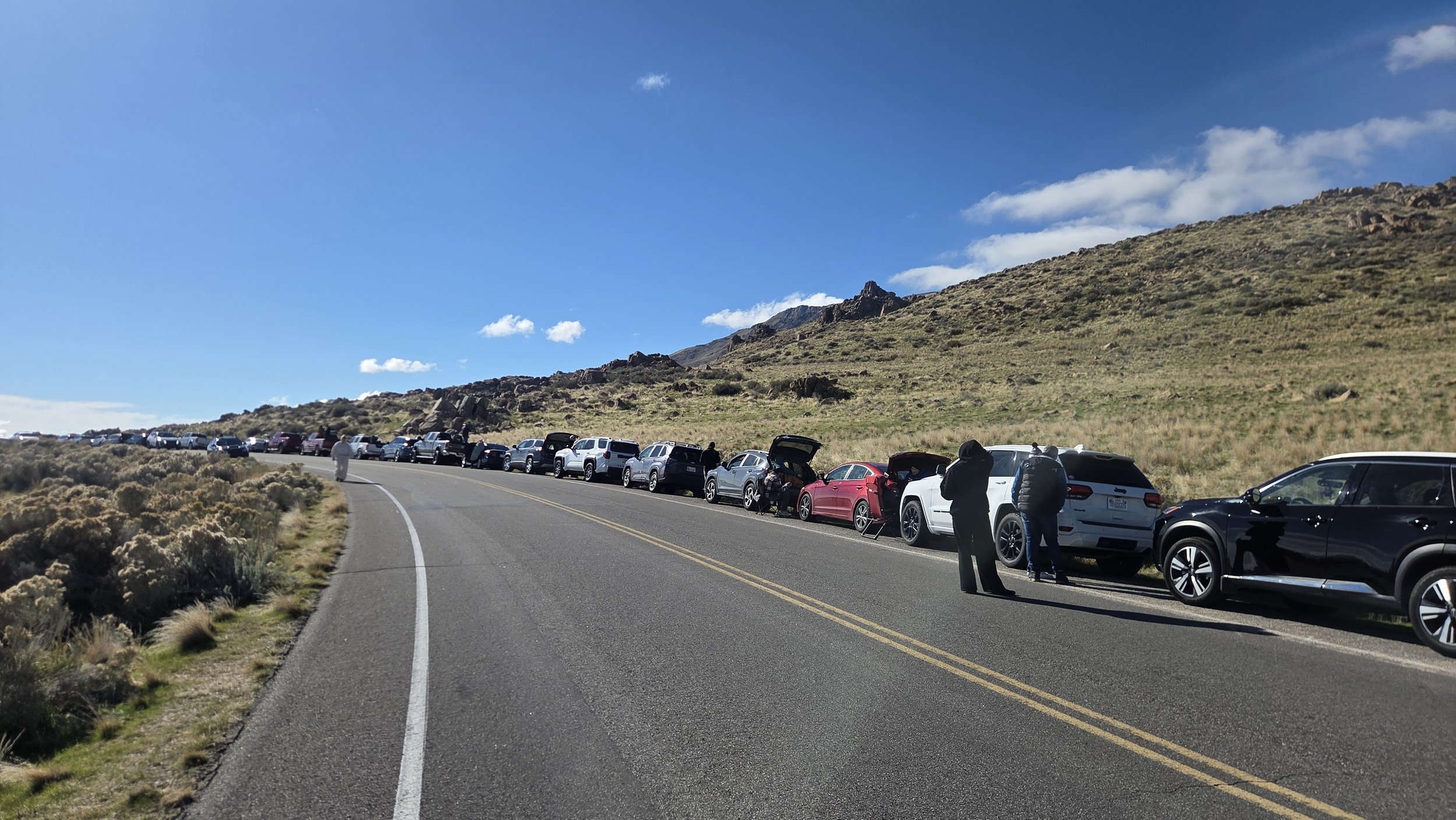
This is where we planned to park.
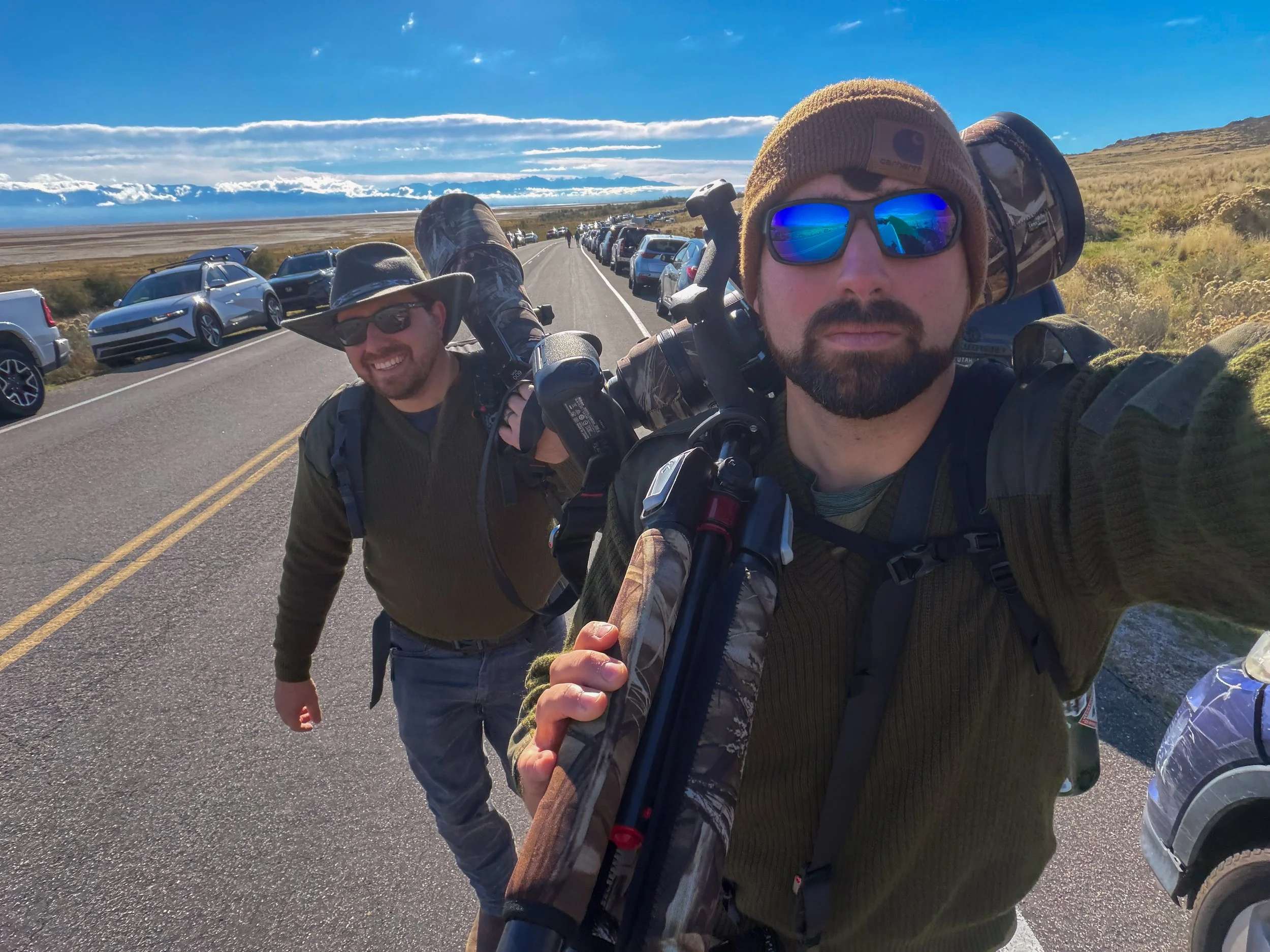
Forced to walk our gear down the road.
The riders did finally crest the ridge with a smattering of bison around noon. Seemingly there were far fewer than there had been the year before. We later learned that some of the bison were spooked by a low-flying helicopter that was not associated with the operation. This caused the herd to split and some went over the range.
As soon as the herd moved up Heartbreak Hill, we made haste to the corrals, only to find a long line of cars and thousands of people already there. Last year we had been rather late, but were able to park close to the end of the fenceline and find a good spot. This year, we were dismayed by the throngs and had not anticipated such a significant increase in visitation. We found a spot along the fence and grumpily set up. However, the big lenses attracted attention and we soon found ourselves in some good conversation with people about camera gear and world travels. Once the riders passed, we switched lenses and headed to the staging area, capturing some great portraits of the riders and their mounts. We split up again, focusing on different groups and details. It took an hour and a half for traffic to empty from the field. We hope that the state park and DNR are better equipped to handle the influx of people next year.
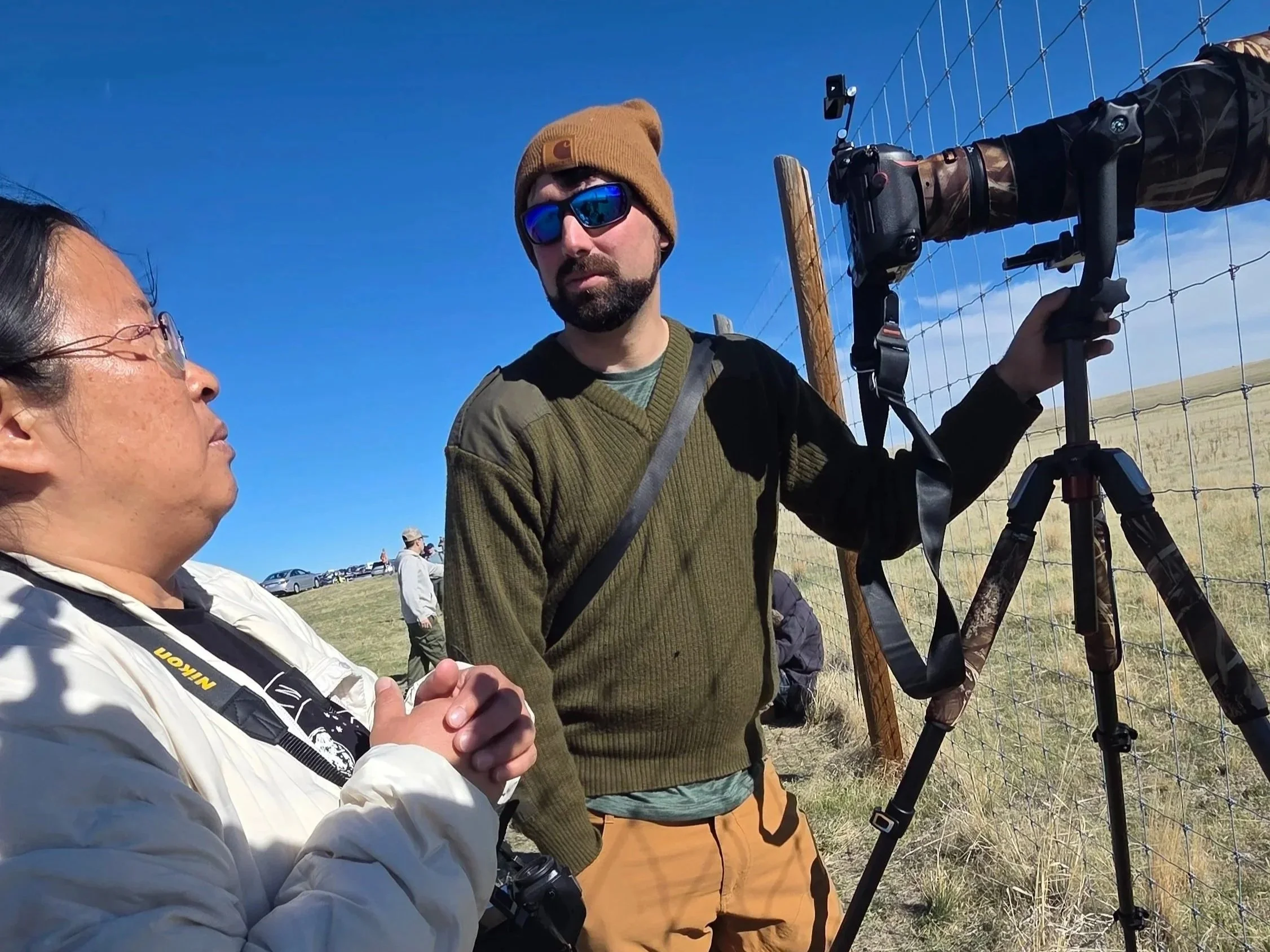
Greg talking cameras with a fellow Nikon user.
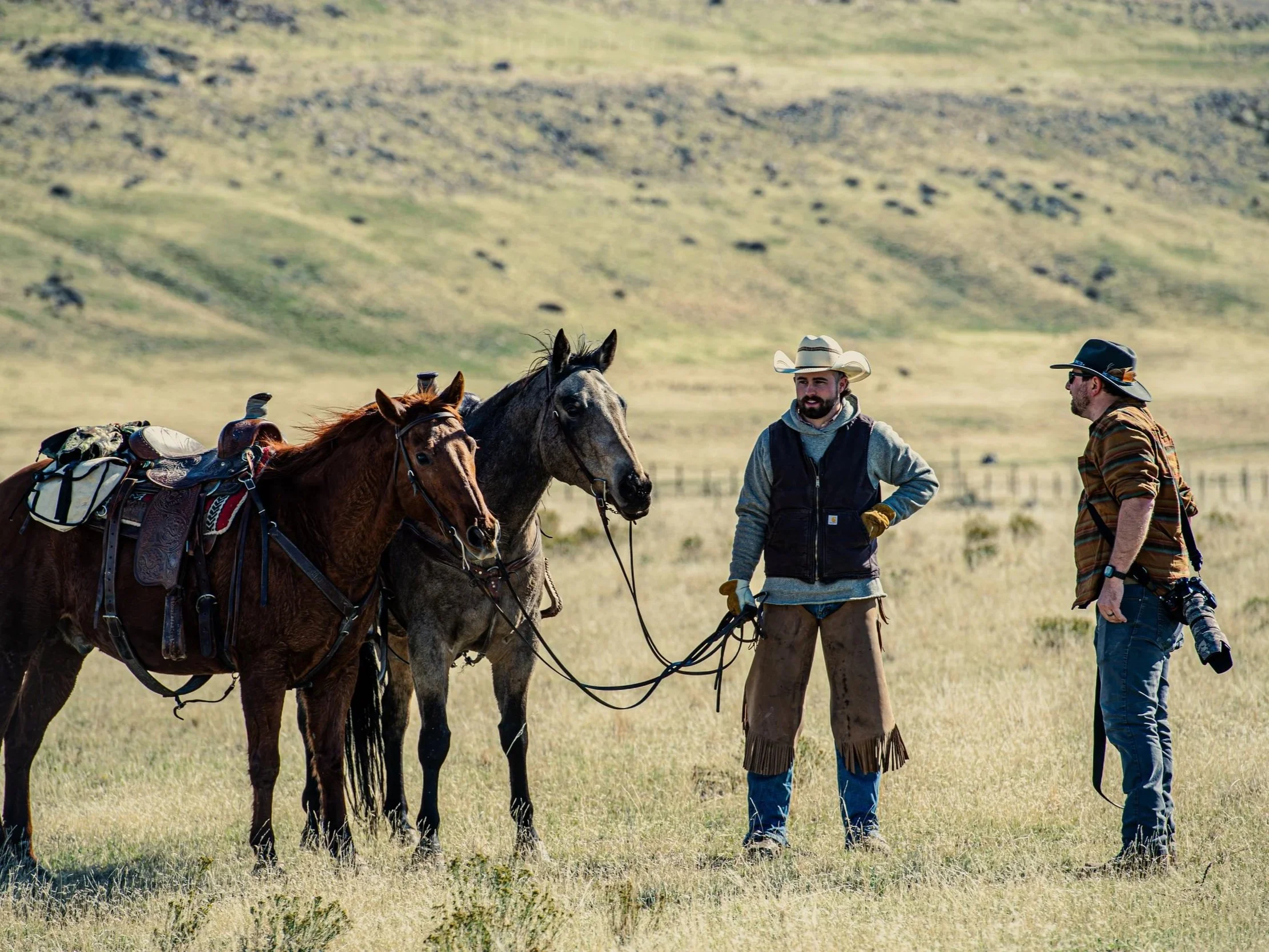
Ed chats up a rider after the roundup.
Despite some setbacks and some surprises, we had a great time and captured some great pictures that capture the essence of the roundup. We cannot wait for next year!
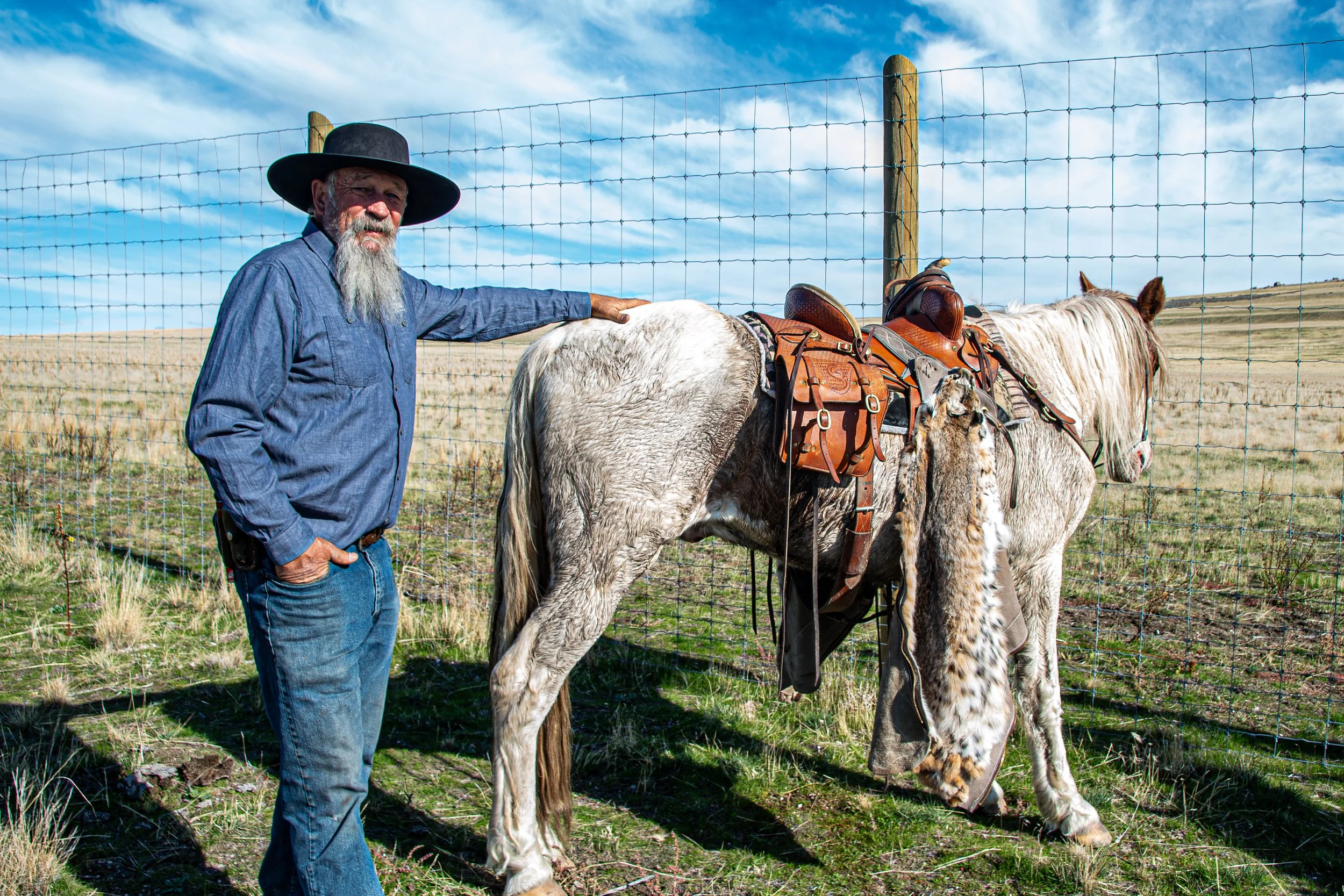
A rider shows off his chaps made with bobcat pelts.